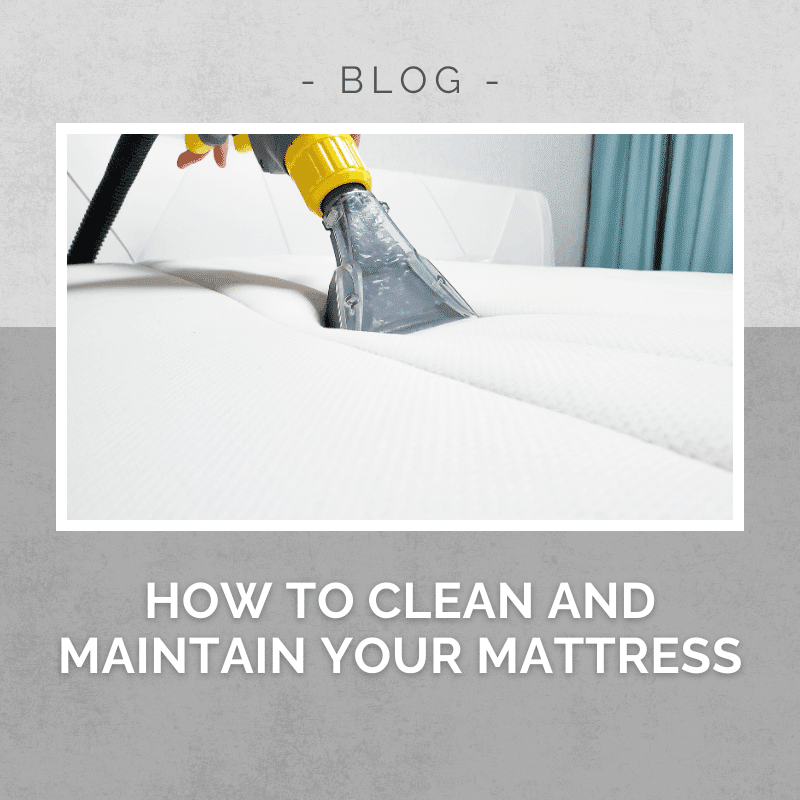
Your mattress is the most neglected, yet crucial part of a truly healthy bedroom. Over time your mattress can collect dust mites, dead skin cells, sweat and bacteria, all of which can affect your sleep quality and health. Regular cleaning and proper maintenance will help extend the life of your mattress and improve your health in general.Â
Here is a simple guide to keeping your mattress fresh, clean and hygienic.Â
Why Mattress Cleaning MattersÂ
Even with clean bed linen, your mattress absorbs moisture, oils and dirt every night. Generally, it is recommended to clean your mattress every 6 months to reduce allergens and odours.Â
Benefits of regular mattress cleaning include:Â
- Reduced dust mites and allergensÂ
- Better sleepÂ
- Extended mattress lifespanÂ
Step-by-Step Guide to Cleaning your MattressÂ
Strip and Wash BeddingÂ
Remove all sheets, pillowcases and mattress protectors. Wash them in hot water to kill dust mites and bacteria – read the washing instructions to make sure what temperature will be safe to use on the fabrics.Â
Vacuum the MattressÂ
Use an upholstery attachment to vacuum the surface of your mattress and make sure to include the seams and edges. This will remove the dust, hair and dead skin cells that settle into the fabricÂ
Spot Clean StainsÂ
For fresh stains you need to blot the stain with a clean cloth as soon as possible. You can use a mild detergent mixed with water if the stain is set in already but be careful not to soak the mattress. Â
Deodorise with Baking SodaÂ
Sprinkle a light layer of baking soda over the mattress to absorb moisture and neutralise odours. Let it sit for at least 30 minutes, then vacuum thoroughly.Â
Air Out the MattressÂ
Open windows and allow airflow to help moisture evaporate. This will reduce the risk of mould and keep your mattress smelling fresh. Â
How Often Should You Clean Your Mattress?Â
- Vacuum every 1-2 monthsÂ
- Deep clean every 6 monthsÂ
- Spot clean immediately after spillsÂ
- Rotate/flip your mattress every 3-6 months. Make sure to follow the supplier instructions to confirm if your mattress can be flipped or not. All mattresses can be rotated.Â
Protect Your Mattress for Long-Term CareÂ
The easiest ways to reduce the amount of dirt and moisture that penetrate your mattress is to use a waterproof mattress protector. This will also help to keep your mattress warranty intact.Â
A waterproof mattress protector will:Â
- Block spills and sweatÂ
- Reduce allergen buildupÂ
- Make cleaning easierÂ
- Extend mattress lifespanÂ
Final ThoughtsÂ
Your mattress plays a big role in the quality of your sleep and general hygiene. With regular mattress maintenance, you can enjoy a fresher, healthier bed and protect your investment for years to come. Â